
Monday, May 30, 2011
Spices export touch an-all-time-high in 2010-11
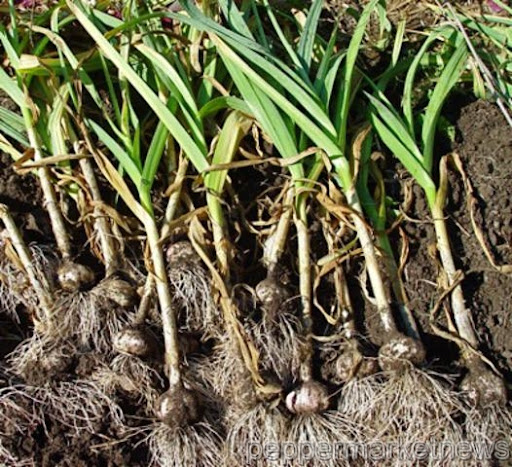 KOCHI: Spice Board today said that the export of spices from India during 2010-11 has registered an-all-time-high both in quantity and value, surpassing the export target of 465,000 tonnes valued Rs 5,100 crore for the financial year 2010-11.
During 2010-11, a total of 525,750 tonnes of spices and spice products valued at Rs 6,840.71 crore (USD 1,502.85 million) were exported, as against 502,750 tonnes valued at Rs 5,560.50 crore (USD 1,173.75 million) in 2009-10, Spices Board Chairman V J Kurian told reporters.
This is an increase of five percent in volume and 23 percent in rupee terms of value. In dollar terms the increase was 28 per cent, he said.
The Board aims to increase the spices export to 3 billion by 2017 and 10 billion by 2025, Kurian added.
He informed that during 2010-11, the export of chilli, ginger, fennel, garlic and other spices including asafoetida and tamarind has increased both in volume and value as compared to 2009-10.
Additionally, the export of value added products including spice oils and oleoresin and curry power/paste has increased both in volume and value as compared to 2009-10.
However, in the case of pepper, cardamom (large), turmeric, nutmeg and mace and mint products the increase is in terms of value only, he said.
Other spices like cardamom (small), coriander, cumin, celergy, fenugreek and other seeds have decreased both in terms of volume and value as compared to previous year.
During 2010-11, a total quantity of 18,850 tonnes of pepper valued at Rs 383.19 crore was exported as against 19,750 tonnes valued at Rs 313.93 crore last year, registering an increase of 22 per cent in value.
The unit value of pepper has increased from Rs 158.95 per kg in 2009-10 to Rs 203.82 per kg 2010-11, he said.
A total quantity of 1,175 tonnes of cardamom (small) valued at Rs 132.16 crore, was exported in 2010-11, as against 1,975 tonnes valued at Rs 165.70 crore last year.
The unit value of cardamom (small) increased from Rs 839 per kg in 2009-10 to Rs 1,124.79 per kg in 2010-11.
During the said financial year chilli export from India registered an all time high in both volume and value with exports of 2,40,000 tonnes of chilli valued at Rs 1,535.54 crore as against 2,04,000 tonnes valued at Rs 1,291.73 crore last year, registering an increase of 18 per cent in quantity and 19 percent in value, he said.
Tuesday, May 17, 2011
Pepper prices to rally, jeera, chilli, coriander may decline
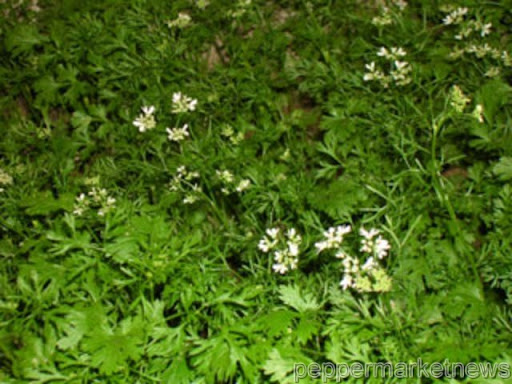 With harvesting in India and Vietnam over, pepper prices have continued to rally, as limited domestic supply coupled with export demand propelled prices higher. Vietnam had exported approximately 30% of their produce. As per market sources, production in India is expected near 48,000 tonne and considering the consistent rise in domestic consumption and a booming population, more than 90% of the production will be consumed locally.
Couple of good economic data had revived expectations of US and European demand, but fresh triggers have been lacking lately.
However, more aggressive participation is expected during Indonesian and Brazilian harvest period. Indonesian crop is expected to reach from June onwards followed with Brazilian crop in the preceding months.
Further, even as broad prospects of pepper looks quite bullish, prices looks to be exhausted after recent runs, with international competitiveness also easing to higher prices, and may prompt an easing of prices.
Jeera’s (cummin seeds) outlook have been largely weak lately, but had supported the prices from further decline. As per the latest projection by trade sources the total production of jeera in the current season is likely to be around 21 lakh bags (1 bag is 60 kg) which is three lakh bags less than the earlier projection. Meanwhile, production in the previous year was reported to be 29 lakh bags. Better crop output is expected in Syria and Turkey and fresh arrivals is expected from May to June period, and could depress domestic prices even further.
Turmeric prices have been rising in the last week on improvement in demand and decline in arrivals. Production is expected on the higher side due to increased acreage of cultivation due to good monsoon. Production in 2011 is expected around 65-70 lakh bags compared with 45 lakh bags in the last year. As per spices board, the exports had declined by 9% compared with last year figures.
Though there has been a recent spurt albeit brief spurt, Cardamom prices have been nose-diving lately as favourable weather conditions had raised the expectation of better as well as early crop. According to trade estimates production in India is slightly higher than 11,000 tonne. As per the estimates of spices board, the production in Guatemala is expected near 20,000 tonne. Total arrivals during the current season from August 1 to May 1,2011, is understood to be 9,351 tonne, which is 3% than last year arrivals.
Chilli futures have been trading with a feeble negative bias pressured by arrivals. Reports of Domestic Market Intelligence Cell (DEMIC) asking farmers to hold the stock and sell towards May-June to take advantage of better pricing have had little effect on prices so far. As per market sources, production in 2010-11 is expected near one million tonne which is 16% lesser than last year production. Attention of farmers to highly rewarding crop like turmeric and cotton and erratic weather condition during the sowing period had considerably reduced the area under cultivation.
Coriander futures have been edging lower recently as arrivals dampened sentiments. Total carry forward stocks have been estimated 25-30 lakh bags. As per trade sources, production is expected to be around of 60-65 lakh bags due to lower acreage of cultivation. Erratic weather condition during the sowing period had decreased the acreage under cultivation. Arrivals usually starts from mid of February and extent till May end, by which prices are expected to firm up and rally higher.
* The author is chief analyst, Geojit Comtrade
Wednesday, May 4, 2011
Most Spices Fall On Weak Demand
 Most of the spices dropped on NCDEX in today's trading session on profit taking triggered by weak demand and arrivals pressure. Pepper dipped on selling at higher levels amid technical cues. During April-February 2010-11, a total quantity of 16,600 tonnes of pepper valued Rs. 334.62 crores was exported as against 18,425 tonnes valuedRs. 293.00 crores of last year. As per the latest updates from the General Statistics Office of Vietnam, Vietnam exported nearly 42,000 tonnes of pepper valued $213 million during the period of January to April 2011. Pepper for the May delivery on NCDEX ended the session lower by 1.50% at Rs. 28911 after hitting the low of Rs. 28860 per 100 kg. The open interest added 1.15% to 8069 tonnes.
Jeera futures dipped on weak demand. Jeera exports were dropped by 38% to 27,500 tonnes while value gained by 48% to Rs. 33,372 lakhs. Jeera for the May delivery on NCDEX ended the session lower by 1.28% at Rs. 14,690 and the open interest dipped 7.05% to 15747 tonnes.
Yellow spice declined on weak demand amid higher production estimation. Turmeric production in 2011 is estimated around 65 lakh bags against 45-48 lakh bags last year (Each bag=70Kg.).As per the latest release from the Spices Board of India, exports of turmeric were down around 9% to 42,500 tonnes during April-February 2010-11. May turmeric futures on NCDEX ended the session lower by 1.44% at Rs. 8500 after hitting the low of Rs. 8440 and the open interest dipped by 1.30% to 13740 tonnes.
Adequate stocks position in the physical market following increased arrivals from producing belts also put pressure on cardamom futures prices. According to trade estimates production in India is slightly higher than 11000 tons. As per the release from the Spices Board of India, during April-February 2010-11, a total quantity of 865 tonnes of cardamom (Small) valued Rs. 100.41 crores as against 1765 tonnes valued Rs. 143.62 crores of last year. As per the estimates of spices board the production in Guatemala expected near 20000 tons. And approximately 90 percent of the harvesting from Guatemala is harvested between October to April period.
As per the latest updates from the Spices Board of India, the average prices of cardamom in the auction held at The Cardamom Processing & Marketing Co-Operative Society Ltd, Kumily on Wednesday (as on 4th May 2011) stood at Rs. 744.01 and maximum price was at Rs. 1077 per kg. The arrivals and offtakes stood at 38915 and 38915 kg respectively. The average prices in the previous auction were Rs. 783.26 per kg, meanwhile arrivals and offtakes stood at 44761 kg and 44480 kg respectively. MCX cardamom for the May delivery ended the session lower by 2.61% at Rs. 917.10 after hitting the low of Rs. 913.40 and high of Rs. 947.00 a kg.
(Source: http://www.indiainfoline.com/Markets/News/Most-Spices-Fall-On-Weak-Demand/3684097109)
Tuesday, May 3, 2011
Vietnam: Rising prices to boost pepper industry

World demand for pepper was expected to rise by about 5 per cent per year in the coming years, they said.
However, they also cautioned that poor cultivation practices including overexploitation could undermine growth in the long run.
Addressing the conference held by the Viet Nam Pepper Association to review its 2008-10 performance and set tasks for 2011-14, chairman Do Ha Nam said the country's total pepper output this year would be about 100,000-110,000 tonnes, the same as last year.
In the first quarter, the country exported 25,128 tonnes of pepper, earning US$123 million, a reduction of 11 per cent in volume but an increase of 44 per cent in value over the same period last year, Nam said.
In April, about 12,000 tonnes of pepper was exported, he added. Given a national average consumption of 5,000 tonnes and border trade of equal amount, a little more than 50,000 tonnes could be exported in the remaining months of the year, he said.
According to the International Pepper Community, world pepper output this year will fall by about 6,500 tonnes against 2010 to 310,000 tonnes due to unfavourable weather conditions and pests in several producing countries.
Nam noted that despite economic difficulties, demand for the spice in the world market had been very stable. China and India had high demand for pepper, importing large volumes every year since their domestic production could not meet local demand, he said.
With high demand and limited supply, pepper prices increased strongly in the past few months, he said.
Average pepper prices on the world market in the first quarter increased by 159 per cent to $4,456 per tonne for black pepper and by 176 per cent to $6,954 per tonne for white pepper against the same period last year.
The prices were expected to rise further in the coming time, Nam said.
Long-term threats
"Although the pepper industry has flourished in recent years, there are many challenges that lie ahead," Nam said.
He said many farmers were aware of the importance of adopting organic farming methods to develop their farms in a sustainable manner, but there were many others who still exploited their farms excessively.
Overexploitation led to lower yields and quality in the future, he warned.
In addition, impacts of climate change, the use of poor seedlings as well as improper planting techniques have created opportunities for new diseases that were attacking the vines, exposing farmers to high risks, he said.
He called on enterprises to invest more in upgrading processing technologies to add more value to Vietnamese pepper and step up trade promotion activities.
The association suggested that the Ministry of Agriculture and Rural Development support the sector in developing quality seedlings and training human resources.
Deputy Minister of Agriculture and Rural Development Luong Le Phuong advised the association to work with relevant agencies to make plan for sustainable development of the pepper industry.
He also urged the sector to focus more on building a brand identity for the nation's pepper products and forge close co-operation between enterprises and farmers.
Deputy Minister of Industry and Trade Nguyen Thanh Bien said the association should cooperate with relevant agencies to set up quality standards that enterprises can apply in processing and export to raise the quality and value of Vietnamese pepper.
Viet Nam last year exported 116,861 tonnes of pepper, earning $419 million, a year-on-year reduction of 13.3 per cent in volume but an increase of 20.5 per cent in value.
Vietnamese pepper products are currently exported to 80 countries and territories, the association said, with the EU being the country's largest buyer.
Viet Nam has 50,000ha under pepper cultivation at present, mainly in six provinces – Binh Phuoc, Gia Lai, Dak Nong, Dong Nai, Ba Ria-Vung Tau and Dak Lak.
(Source: http://english.vietnamnet.vn/en/business/7698/rising-prices-to-boost-pepper-industry.html)
Thailand: Spice exporter gets taste for overseas expansion
Nguan Soon Group, the producer of Hand Brand No. 1 pepper and other spices, is planning an international expansion this year.

Spice Story’s branch in Singapore will serve as a model for Thai spice exporters, prompting other Thai players to follow in the company’s footsteps, says Mr Visit.
Managing director Visit Limprana said the company will see its first foreign location of its Spice Story spice and pepper concept store.
Spice Story is now open in Bangkok's Siam Paragon shopping centre, where some international retailers stumbled across it by accident, he said.
"That led to our being approached by a number of foreign retailers such as Takashimaya in Singapore and Selfridges and Harvey Nichols in London to open a spice shop in their retail complexes," said Mr Visit.
If a deal can be worked out, Spice Story will be the company's second business to go international following six decades of pepper exports.
The first foreign Spice Story store is expected to open in Singapore's Takashimaya shopping centre this year at a cost of 10 million baht.
About 70% of its offerings will be Thai pepper and other spices and the rest international spices.
Mr Visit said the branch in Singapore will serve as a model for Thai spice exporters, prompting other Thai players to follow in the company's footsteps.
Up to six more Spice Story shops are also expected in Japan, the US and Europe within the next five years.
Now is the right time for Nguan Soon to enter international markets, given the worldwide popularity of Thai cuisine, said Mr Visit, adding that the advent of the Asean Economic Community (AEC) in 2015 will present even more opportunities.
To ensure an adequate supply, the group recently started negotiating with the Lao, Vietnamese and Burmese governments for the contract farming of some spices. Other spices that cannot be grown in this area will be imported from elsewhere.
Mr Visit, who is also chairman of the Federation of Thai Industries' food processing industry club, said the number of Thai restaurants outside the country now stands at 13,000, up from 7,000 three years ago.
He said the Thai ingredients industry would benefit more from the increasing popularity of Thai food worldwide if the government supported local ingredients for both Thai restaurants and ready-to-eat meals abroad.
The club will join hands with UBM Asia (Thailand) to arrange the Food Ingredients Asia 2011 fair at the Queen Sirikit National Convention Centre in Bangkok from Sept 21-23.
The event will enable local ingredient suppliers to meet buyers from other Asean countries, while seminars will provide information about the AEC for spice producers.
Also this year, Nguan Soon will introduce a chain of Thai fast-food restaurants in Bahrain called Muay Thai.
It has already set up a joint venture in that country, Muaythai Quickmeal, with registered capital of 20 million baht, to operate the chain.
Nguan Soon owns 90% and a Bahraini partner 10%.
Muay Thai will offer 30-40 menu items including combo sets of sticky rice, papaya salad and grilled chicken.
Saturday, April 30, 2011
Weekly Spices Wrap Up: Pepper Continues To Win The Game On Strong Fundamentals
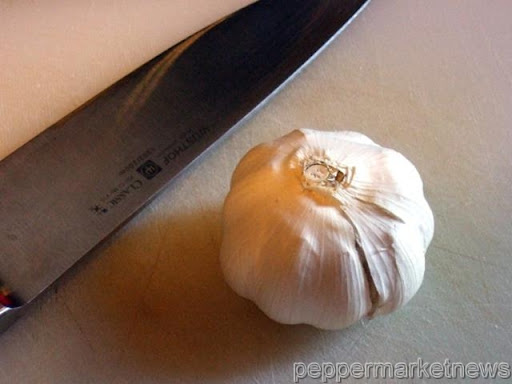 Pepper continued the uptrend on strong demand amid tight supplies in the domestic and global markets. Reports of Vietnam not selling aggressively supported the uptrend in the prices. Indian pepper MG-1 quoted at $6,500-6,800 and Vietnam 500 GL surged to $ 5,900 per tonne. The spot pepper prices touched new high in India. Malaysian white pepper prices had enjoyed a good run and surged by about 27% over the last year. Prices surged further boosted by the tight supply globally as farmers hold back their stocks in anticipation of higher prices. Black Pepper for the May contract on NCDEX ended the week higher by 4.40% at Rs. 29069 after hitting the fresh high of Rs. 29342 per 100 kg.
Chilli prices again came under selling pressure as the crop damage size is expected to be lesser than the earlier forecast. Good Chinese crop this year is grabbing all export orders from US and EU which is impacting Indian prices as of now. As per news sources, export demand from Bangladesh, Malaysia is the only supporting factor for prices at lower levels. Chilli 334 variety price dipped by Rs. 100 from the last close to Rs.9100 per quintal in the Guntur spot market. Chilli for the June delivery ended the week down 12% at Rs. 9580 per 100 kg.
Market sources said pick-up in demand at the spot markets mainly pushed up jeera futures prices but supply pressure capped the gains. As per market sources, the total production of jeera in the current season is likely to be around 21 lakh bags (1 bag = 60 kgs ) against 28 lakh bags reported last year. This was mainly due to sharp decline in sowing acreage of jeera crop in Gujarat. Jeera for the May contract ended the week higher by 2.45% at Rs. 15,155 per 100 kg and the open interest dipped by 6.32% to 17,466 tonnes.
Demand from other part of country has also slowed down which is also pulling down the turmeric prices. As per the latest release from the Spices Board of India, exports of turmeric was down around 9% to 42,500 tonnes with value of exports was up by 78% toRs. 608.85 crores, during April-February 2010-11. As per trade sources, turmeric production in 2011 is estimated around 65 lakh bags against 45-48 lakh bags last year (Each bag=70Kg.). The NCDEX May turmeric futures ended the week marginally higher by 0.33% at Rs. 8880 per 100 kg and the open interest added 5.75%.
Cardamom plunged further on weak demand amid higher arrivals. MCX cardamom May contract ended the week down by 7% at Rs. 988.60 a kg and the open interest dipped by 4.12% to 1,579 tonnes. According to trade estimates, India's cardamom production is slightly higher than 11,000 tons. As per the estimates of spices board, the production in Guatemala expected near 20,000 tons and approximately 90 percent of the harvesting from Guatemala is harvested between October to April period. As per the latest release from the Spices Board of India, a total quantity of 865 tonnes of cardamom (Small) valued Rs. 100.41 crores exported during the April-February 2010-1 as against 1765 tonnes valued Rs. 143.62 crores of last year.
Major Events During The Week
Malaysian White Pepper Prices Surge More Than 10% Over Last Year Close:
Pepper prices surged further boosted by the tight supply globally as farmers hold back their stocks in anticipation of higher prices. The average price of domestic white pepper surged to RM21,530 per tonne on Tuesday, an increase of RM2,030 per tonne, or more than 10%, compared with 2010s highest closing price of RM19,500 per tonne. The price broke the RM20,000 per tonne mark early last month. White pepper prices had enjoyed a good run and surged by about 27% last year.
The average price of black pepper hit this years new high of RM13,400 per tonne yesterday, which was up by RM1,300 per tonne or nearly 11% from the closing price of RM12,100 last year. In 2010, black pepper soared by nearly 30%, from RM9,350 per tonne recorded in 2009.
White and black pepper hit their historical highs of RM28,000 and RM16,000 per tonne respectively in 1999. From those peaks, they nosedived to RM6,500 and RM4,000 per tonne respectively five years later before making a strong recovery in 2006.
Malaysian Pepper Board director-general Grunsin Ayom said farmers in India and Brazil, the world's second and fourth largest producer respectively, had been holding back their stocks, hoping to sell at better prices later. He said some local farmers, who were economically better off, were also waiting to sell their stocks into the price rally. Pepper is increasingly used as an ingredient in food processing, and domestic consumption had gone up steadily over the years. Malaysia, the worlds fifth largest pepper producer, exported an estimated 14,040 tonnes worth RM190mil last year, up from 13,122 tonnes valued at RM156mil in 2009. There are more than 14,100 ha of pepper farms in Malaysia, of which 14,000 ha are in Sarawak. The other pepper-producing states are Johor and Sabah.
Outlook For Next Week:
Black Pepper is likely surge further on strong demand amid tight supply position. However, chance of profit taking cannot be ruled out. Black Pepper for May delivery is likely to face resistance at Rs. 29550 and then at Rs. 29700 while support at Rs. 28300 and at Rs.28050 levels.
Weak fundamentals are likely to pull down the cardamom prices further. MCX May cardamom is likely to find the support at Rs. 950 and resistance at Rs. 1,020 a kg.
Tuesday, April 26, 2011
Select spices surge on strong demand
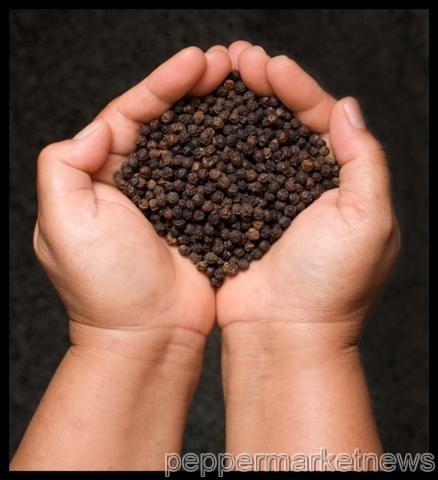 Black pepper prices rose at the spices market here today due to heavy offtake from stockists and traders coupled with rising overseas demand. Elsewhere, copra Rajapur and copra edible also firmed up on increased domestic buying.
While, copra Kozhikode moved down slightly owing to reduced buying from millers. Black pepper spurted by Rs14 per kilo to Rs305/325 from Monday's closing level of Rs291/311.
Copra Rajapur Mumbai and copra edible Mumbai went up by Rs100 per quintal each to Rs8,200 and Rs7,800, respectively as compared to Rs8,100 and Rs7,700 yesterday.
However, copra office Kozhikode eased by Rs25 per quintal to Rs6,750 as against Rs6,775 in the previous session.
Other spices closed stable in the absence of any market moving factors.
Following are today's closing rates in Rs, with the previous rates in brackets: Black pepper (per kg) 305/324 (291/311), ginger bleached(per kg) 175 (175), ginger unbleached (per kg) 205 (205), copra office Alapuzha (per quintal) 6,850 (6,850), copra office Kozhikode (per quintal) 6,750(6,775), copra Rajapur Mumbai (per quintal) 8,200 (8,100) and copra edible Mumbai (per quintal) 7,800 (7,700).
(Source: http://www.dnaindia.com/money/report_select-spices-surge-on-strong-demand_1536415)
Monday, April 11, 2011
Chilli, pepper up on stockists buying support
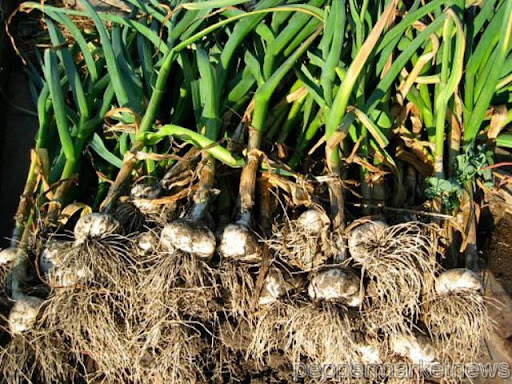 Red chilli and black pepper prices rose further up to Rs 300 per quintal in the national capital today on increased buying by stockists and exporters.
Restricted arrivals from producing belts also put pressure on the prices.
Red chilli prices rose by Rs 200 to settle at Rs 7,100-13,100 per quintal on fresh buying by retailers due to domestic demand amid low stocks.
Black pepper prices also traded higher at Rs 25,200-25,300 against previous closing of 24,900-25,100 per quintal.
Traders said sentiments turned better following rising domestic and export demand in tandem with a firming trend at futures market, helping chilli and pepper prices to trade higher in the wholesale kirana market here.
Following are today's quotations in Rs per quintal:
Ajwain 16,000-22,000, black pepper common 25,200-25,300, betelnut (kg) 110-120, cardamom brown-Jhundiwali (kg) 980-1,000, and cardamom brown-Kanchicut (kg) 1,100-1,250.
Cardamom small (kg): Chitridar 890-950, cardamom (colour robin) 930-950, cardamom bold 940-950, cardamom extra (bold) 1,120-1,140 and cloves (kg) 530-585.
(Source: http://www.business-standard.com/india/news/chilli-pepper-upstockists-buying-support/131570/&tp=on)
Thursday, April 7, 2011
Indian Yellow Spice Futures Extend Gains For Third Consecutive Days
 Indian Turmeric futures extended the gains for the third day on fresh buying support. Turmeric prices in the intraday will trade firm due to improved buying by the market participants. Stockiest at the domestic mandi are not willing to offload their stocks at lower levels.
According to Spices Board of India, exports of Turmeric from India during April 2010- February 2011 stood at 42,500 tonnes as compared to 46,575 tonnes in 2009-10, a decline of 9%. Turmeric production in the year 2010-11 is estimated at 69 lakh bags (1 bag= 70 kgs) compared to 48 lakh bags during the previous year.
Benchmark April contract on NCDEX traded in the range of Rs. 10,430-Rs 10,290 per 100 kg. The contract increased by 1.94% over the last close. The contract is currently trading higher at Rs. 10,378, up 1.43% over the last close and the open interest added 0.44% to 6945 tonnes. The contract is finding strong resistance at Rs. 10,430-10,440 and only break above Rs. 10,500 will decide the trend.
Monday, April 4, 2011
India to become global spice hub soon
NEW DELHI: India, the world's leading spice producer, exporter and consumer, is all set to become a hub of global spice trade with the launch of an international body that would coordinate it.
"Process is on to open the head-office of World Spice Organisation (WSO) at Kochi. It has been registered and will be formally launched within three months," Founding Chairman WSO Philip Kuruvilla told PTI.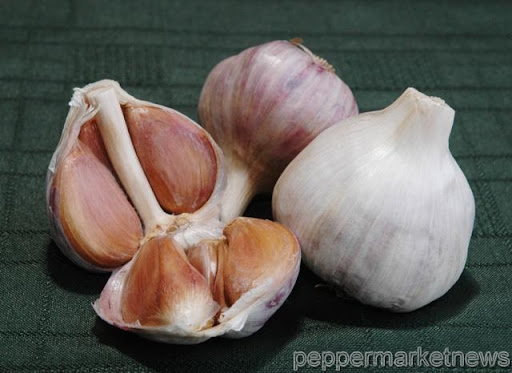
Kochi in Kerala is the hub for spice trading in India. The body will not only seek better solutions for sustainability of spice production, but would also address the issue of food safety regulations. It seeks to provide a global platform from the farm to the end user, Kuruvilla said.
"Several spice related organisations have pledged their support and have welcomed the initiative," Kuruvilla said, without revealing their names.
A global body that can connect all the spice producing and exporting countries for timely exchange of information from production to exports to regulation is needed, he added.
"WSO will focus on sustainability of spice production vis-a-vis rising global demand and harmonisation of all the global regulatory policies on spices," All India Spice Exporters Forum (AISEF) Chairman Jeemon Korah told PTI.
With demand for spices increasing as new range of food applications are being launched and use of spices in other products like pharma, Korah, who is also the founding member of WSO said.
Though the production of spices is increasing at an year-on-year basis, yet it is still insufficient to match the demands, he said, adding that issues of demand and supply will be one of the core areas for WSO.
"Another major role that this organisation will look at is to create awareness among the producing and exporting countries regarding food safety policies, demand-supply situation and value addition," Kuruvilla said.
Explaining the issue of food safety regulations, he said various consuming countries in Europe and America are bringing in food safety norms, which make things difficult for producing countries to meet.
"When a country brings a regulation regarding food safety and standard of spices, the information takes a lot of time to reach the producing countries, which leaves little time with the producer to adjust according to the guidelines and this results in huge losses," he explained.
Spice Board, the government body for the development and promotion of Indian spices has welcomed the creation of WSO.
"Spice Board welcomes such an initiative and will extend all possible help for the setting up such an organisation," Spice Board Chairman V J Kurian told PTI.
A common platform globally needs to be created to address policies and legislations related to spices, he added.
"Various proposals have been discussed regarding the creation of this organisation," Kurian said.
Saturday, April 2, 2011
Spices exports up 19% in April-Feb ’11
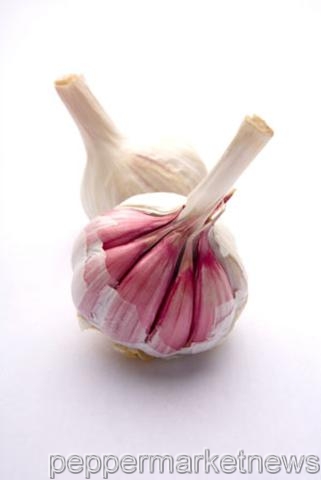 KOCHI: Exports of spices and spices products from India have registered an increase of four per cent in volume and 19 per cent in terms of value during April-February 2010-11. In dollar terms the rise in exports is 24 per cent.
The country exported 471,165 tonnes of spices and spice products valued `6,030.74 crore as against 453,495 tonnes valued `5,058.26 crore in April-February 2009-10.
The spices exports during the period have also surpassed last year’s exports of `5,560.50 crore. Exports of chilli, ginger, fennel, garlic and other spices such as asafoetida and tamarind have shown an increase both in volume and value.
The exports of value added product — spice oils and oleoresin and curry powder/paste — have also shown am increase both in volume and value as compared to April-February 2009-10.
However, in the case of pepper, cardamom (large), turmeric and mint products the increase is in terms of value only.
Other spices like cardamom (small), coriander, cumin, celery, fenugreek, other seeds and nutmeg and mace have decreased both in terms of volume and value as compared to last year.
During April-February 2010-11, 16,600 tonnes (18,425 tonnes) of pepper valued `334.62 crore (`293.00 crore)was exported. The unit value of pepper has increased to `201.58 per kilogram (`159.02).
Cardamom (small) exports stood at 865 tonnes (1,765 tonnes), valued at `100.41 crore (`143.62 crore).
Chilli exports during the period were 2,18,500 tonnes (1,80,750 tonnes) valued at `1,379.52 crore (`1,156.57 crore), an increase of 21 per cent in quantity and 19 per cent in value.
Ginger exports were at 12,000 tonnes (5,100 tonnes) worth `77.29 crore (`41.51crore), registering an increase of 135 per cent in quantity and 86 per cent in value.
During the period, the export of spice oils and oleoresins has also increased to 6,800 tonnes valued `803.02 crore from 6,225 tonnes valued `651.68 crore of last year.
During April- February 2010-11, curry power/paste export were pegged at 13,250 tonnes (13,100 tonnes) valued `178.76 crore (`173.30 crore).
(Source: http://expressbuzz.com/finance/spices-exports-up-19-in-april-feb-%E2%80%9911/261842.html)
Friday, April 1, 2011
Fall in domestic prices may boost garlic exports
Kochi: Garlic exports are likely to increase further as prices come down in the domestic market, traders said.
From being a net importer of garlic, India has turned into a big supplier of garlic in the global market due to a shortfall in the Chinese crop and good domestic production, traders said. Apart from its traditional market of Bangladesh, Indian garlic’s are now exported to Pakistan, Thailand and Malaysia.
Exports for the first eleven months of the current financial year are already higher by 66% in volume and 138% in value term. Exports would have been much higher but the sharp rise in domestic prices has impacted the figure during the last quarter of 2010.
Unseasonal rains in major garlic producing regions disrupted production, thus reducing the supply of fresh crop and pushing prices in the domestic market, traders said.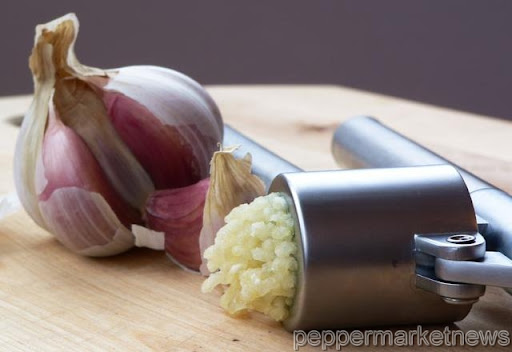
“Retail price in the domestic market even touched Rs 300 per kg in December 2010. Prices are down by Rs 40-50 per kg and exports are back,” Kanubhai Mehta, a Mumbai-based trader told FE. “It is reported that the Chinese crop for 2011 is also lower and the good harvest in India would result in higher exports,” Kanubhai said.
Spices Board estimates country’s garlic production to be around 10,00,000 tonne per annum. Indian garlic production is expensive due to low productivity, poor genotypes, and high cost of farming.
In India garlic is mainly cultivated during winter season and reports indicate a rise in acreage. Demand for garlic is seen increasing rapidly with the higher sales of branded food pickles and curry products. It is also widely used for producing herbal products pastes and medicines.
(Source: http://www.financialexpress.com/news/fall-in-domestic-prices-may-boost-garlic-exports/770495/0)
Monday, March 21, 2011
Turmeric tumbles on subdued demand
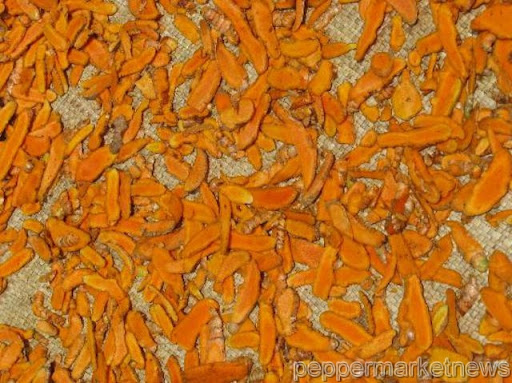 Turmeric futures turned lower on arrivals sentiments in the physical market. Spot prices in Nizamabad traded near Rs 11000 per quintal.
And arrivals in Nizamabad reported near 12000 bags. Production is expected on the higher side due to increased acreage of cultivation due to good monsoon.
Production in 2011 is expected around 65-70 lakh bags compared with 45 lakh bags in the last year.
Export demand is expected to improve in near future which also limited the down fall. As per trade sources overseas demand from dubai is also expected in near future.


